

436 N Roxbury Dr PH A, Beverly Hills, CA 90210
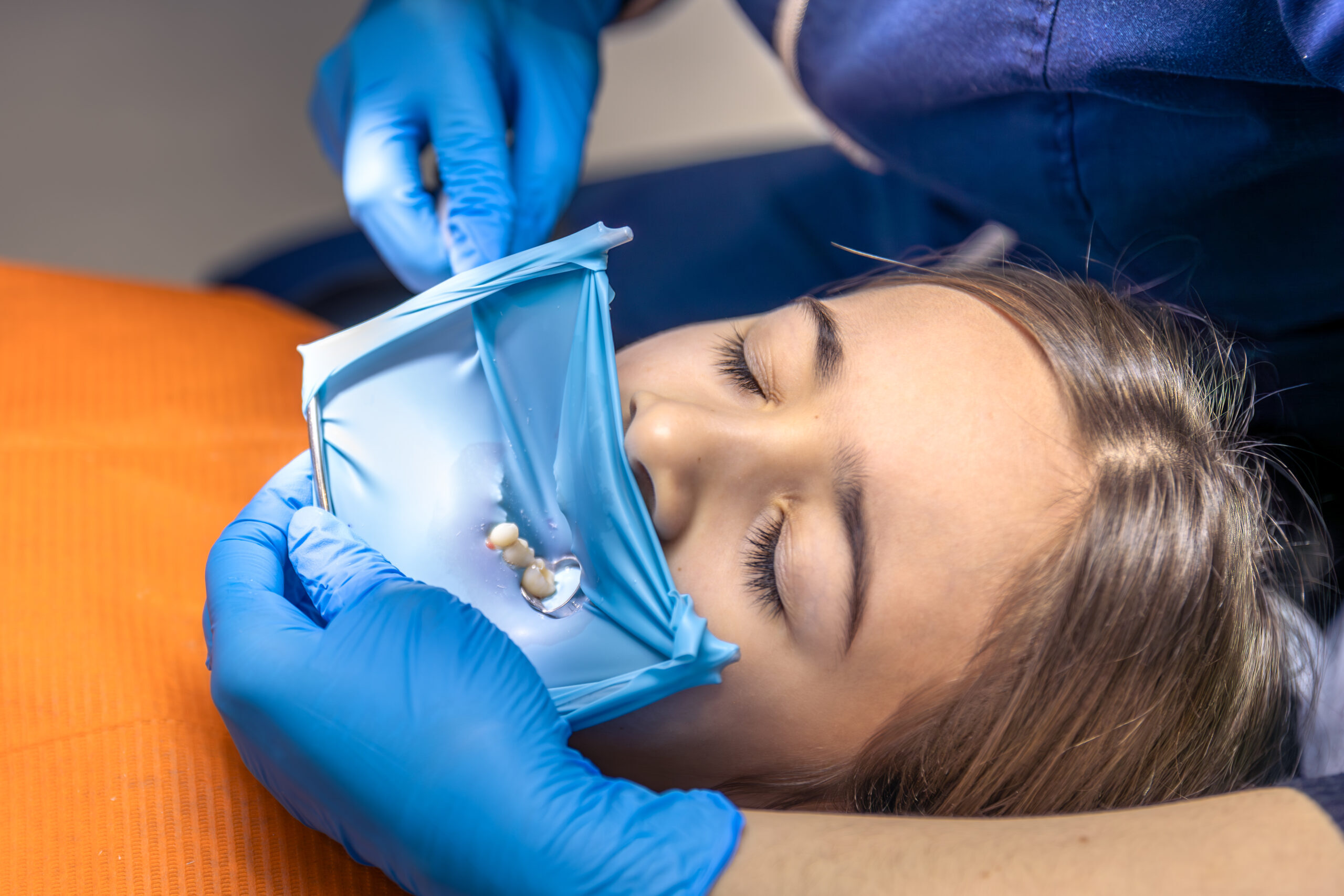
When you receive a filling, bonding treatment, or another restorative procedure, much of the focus is naturally on the visible result. Your dentist is focused on removes damaged tooth structures. places the restorative material, and shapes the restoration to support a natural appearance and function. However, the treatment environment is also an important part of the procedure.
Keeping the treatment area clean, dry, and properly isolated can be particularly important during certain restorative procedures. Saliva, moisture, and movement from the tongue or cheeks can make it more difficult to maintain a controlled working environment.
This is one reason some patients may see a rubber dam used during treatment. At Dr. Roxanne Salavati’s Beverly Hills practice, isolation is part of a careful, conservative approach to restorative care when appropriate for the procedure.
What Is a Rubber Dam?
A rubber dam is a thin sheet placed around the tooth or teeth being treated. It creates a barrier between the treatment area and the rest of the mouth.
The dam helps keep the tongue and cheeks away from the working area while also helping control saliva and moisture. Although it may look unfamiliar if you have never experienced treatment with one, its purpose is straightforward. It helps create a cleaner and more controlled environment for specific dental procedures.
Depending on the procedure, the dam can also help keep dental materials and instruments separated from the rest of the mouth.
Why Does Keeping a Tooth Dry Matter?
Certain restorative materials and adhesive procedures require careful moisture control during placement. Excess moisture can interfere with some clinical steps, particularly when the procedure involves bonding a restorative material to the tooth.
Think about trying to glue two surfaces together while one is wet. The conditions are simply different from working with clean, controlled surfaces.
That does not mean every dental procedure requires a rubber dam. The need for isolation depends on factors such as the tooth being treated, the type of procedure, the materials involved, and the clinician’s treatment approach. When moisture control is important, however, a physical barrier can be a useful part of the procedure.
How Rubber Dam Isolation Supports a Conservative Approach
Biomimetic dentistry focuses on working with the natural tooth rather than automatically removing more tooth structure than necessary. The philosophy places importance on preserving healthy tooth structure and restoring teeth in a way that considers their natural function.
For patients looking for this type of treatment, rubber dam dentistry can be part of a carefully controlled restorative procedure.
At Dr. Salavati’s Beverly Hills office, treatment planning is individualized according to each patient’s dental condition, treatment needs, and goals. Isolation techniques are selected based on the specific procedure rather than being used as a one-size-fits-all approach.
What Patients May Notice During Treatment
If you have never experienced treatment with a rubber dam, you may have a few questions.
The material sits around the tooth being treated and leaves the working area accessible. You can still breathe normally through your nose, and your dental team will explain what to expect before treatment begins.
Some patients appreciate that the area around the tooth feels more separated from the rest of the mouth. Others simply see it as another part of the procedure.
The important point is that isolation is a clinical technique, not a treatment in itself. Whether it is appropriate depends on the tooth, the procedure, and your individual circumstances.
When Might Rubber Dam Isolation Be Helpful?
A dental professional may consider isolation when performing procedures such as:
- Composite or tooth-colored restorations
- Adhesive bonding procedures
- Certain restorative treatments
- Root canal treatment
- Procedures where moisture control is especially important
- Treatment where protecting the surrounding tissues is beneficial
Not every patient or procedure requires the same approach. Your treatment plan should be based on the condition of your teeth and the specific procedure being performed.
Why Patients in Beverly Hills May Want to Ask About Their Treatment Approach
Patients throughout Beverly Hills, West Hollywood, Bel Air, Santa Monica, Brentwood, Century City, and the greater Los Angeles area have access to a range of restorative dental treatment options.
If you are comparing treatment plans or seeking a second opinion, it is reasonable to ask how your procedure will be performed and why a particular technique is being recommended.
Useful questions include:
- How much healthy tooth structure can be preserved?
- How will the tooth be isolated during treatment?
- Why is a particular restorative material being recommended?
- How will the restoration be checked after placement?
- What can I expect from the tooth over the long term?
A good consultation should leave you with clear answers rather than more confusion.
Frequently Asked Questions
Is a rubber dam necessary for every filling?
No. The need for isolation depends on the procedure, tooth, materials being used, and the clinician’s treatment approach.
Does having a rubber dam placed hurt?
The placement itself should not be painful. Your dental team can explain how it will be positioned and make adjustments for comfort when necessary.
Can I breathe normally with one in place?
Yes. A rubber dam is positioned around the teeth being treated, not over your nose. You can breathe normally through your nose during treatment.
Is this approach part of biomimetic dentistry?
It can be. Biomimetic care emphasizes conservative treatment and preservation of natural tooth structure, while careful isolation can help create controlled conditions for certain restorative procedures.
Should I ask about isolation before getting restorative work?
Absolutely. If you are interested in a conservative approach to restoring your teeth, asking about moisture control and isolation is a reasonable part of your consultation.
Ready to Discuss Your Options?
If you are considering restorative treatment or simply want to understand a different approach to caring for your teeth, a consultation can help you make an informed decision.
Dr. Roxanne Salavati’s Beverly Hills practice provides personalized prosthodontic and holistic dental care for patients throughout Los Angeles. If preserving your natural teeth and understanding the details of your treatment matter to you, schedule a consultation to discuss your goals and options.